








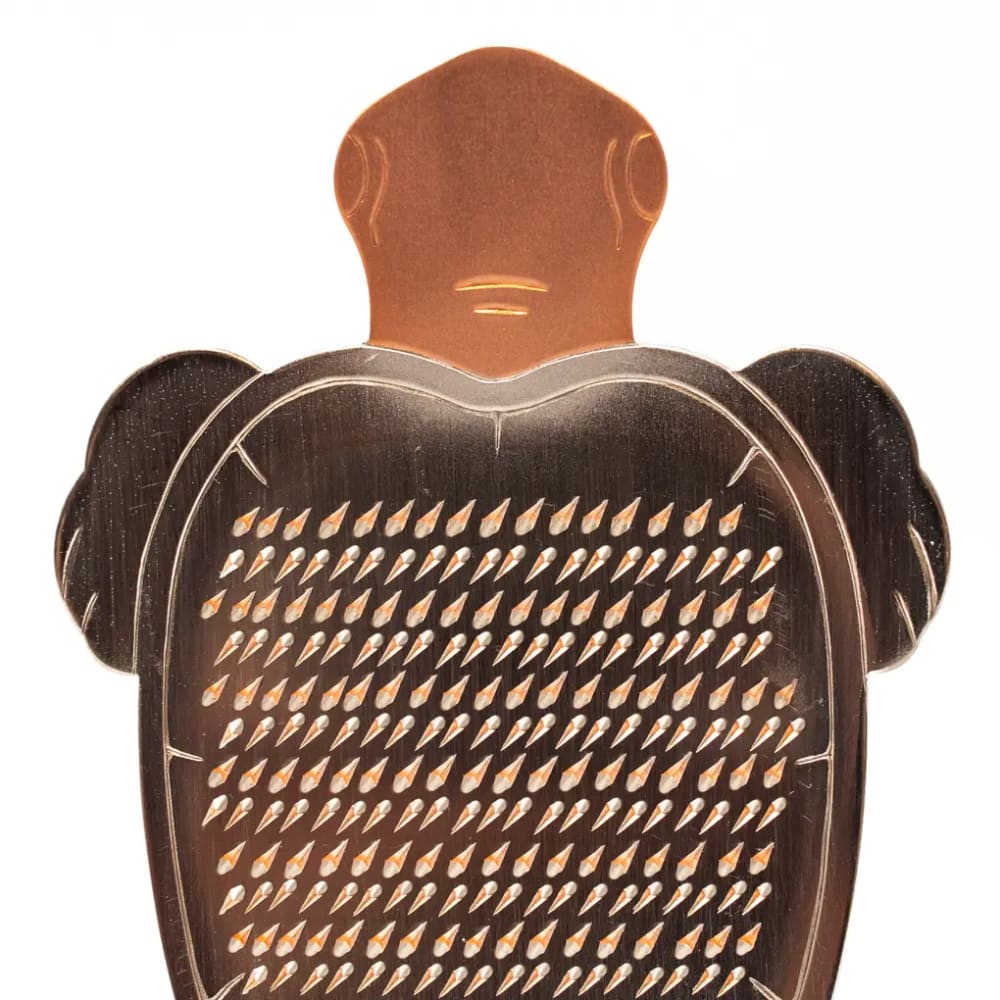
Turtle grater
3 x €17,08 with Klarna.
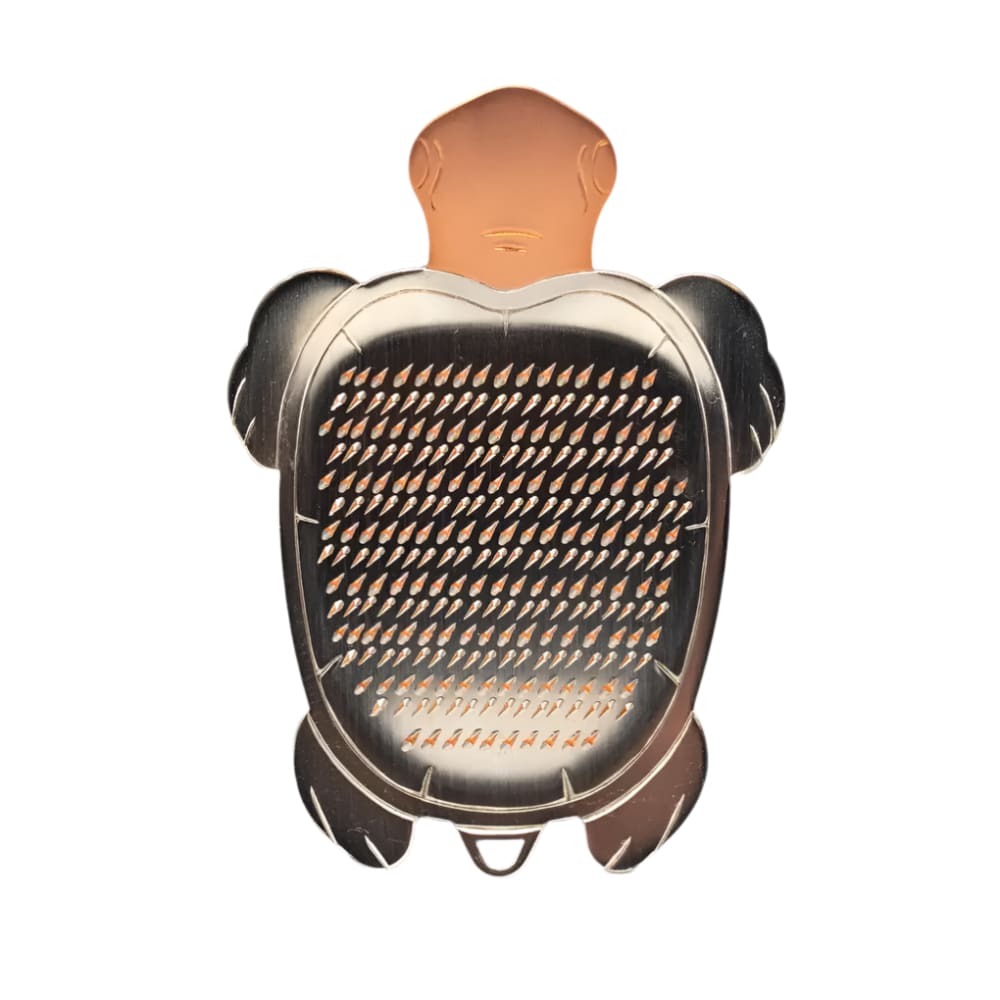
OOYA Oroshigane Japanese grater in the shape of a turtle, handmade in Saitama from hammered, tinned, and hand-toothed copper. Grates more finely than Western models for garlic, ginger, wasabi, or nutmeg without crushing the food.
TURTLE GRATER
Oroshigane graters are amazing. A staple in Japanese kitchens, they grate more finely than traditional Western graters and quickly reduce garlic, horseradish, daikon, radish, wasabi, lemongrass, ginger, nutmeg, and chili peppers.
Each piece is individually handmade in Saitama by Oya Seisakusho, founded in 1949. The copper is hardened by hammering, then tinned and cut into the traditional turtle shape. Finally, the teeth are raised one by one by hand, with a chisel and hammer.
The very sharp, small blades mean they cut rather than crush your ingredients, preserving texture and flavor. Rub your vegetables in a circular motion to create fine pastes.
These blades are sharp! Please be careful.
For increased longevity, we recommend hand washing.
Features
- Dimensions
- 103 × 70 mm
- Weight
- 65 g
- Material
- Copper
- Color
- Gray
- Origin
- Japan
- Manufacturing
- Artisanal
Use & Care
Thoroughly clean and dry after each use. Fibers may remain lodged in the blades; they can be removed with a brush such as a toothbrush.
If rust marks appear, they can be removed with a mixture of white vinegar and salt.
Copper takes shape under the hammer
In Saitama, the Oya Seisakusho workshop, founded in 1949, makes oroshigane graters. Each piece comes from the hands of a craftsman, individually shaped. The copper is first hardened by hammering, then tinned and cut into the traditional turtle shape. The teeth are then raised one by one, with a chisel and hammer. It is this slow work that creates blades so small and so sharp.
Know-how
What’s at stake in every grater
Hammer-hardened copper
The copper is hammered before any shaping. This step hardens it and prepares the plate for the work of the teeth.
Tinning
Once hardened, the plate is tinned. The tin covers the copper and gives the grater its bright surface.
The turtle shape
The plate is then cut into the shape of a turtle, the traditional silhouette of these Japanese graters.
Teeth raised with a chisel
Each tooth is raised by hand, one by one, with a chisel and hammer. All this work is done by hand, piece by piece.
Cut rather than crush
The blades are small and very sharp, so they cut the food instead of crushing it. The texture and flavor remain intact.
Gesture and maintenance
Rub the food in a circular motion to get a very fine puree. Hand washing is recommended, and be careful with your fingers, the blades are really sharp.