




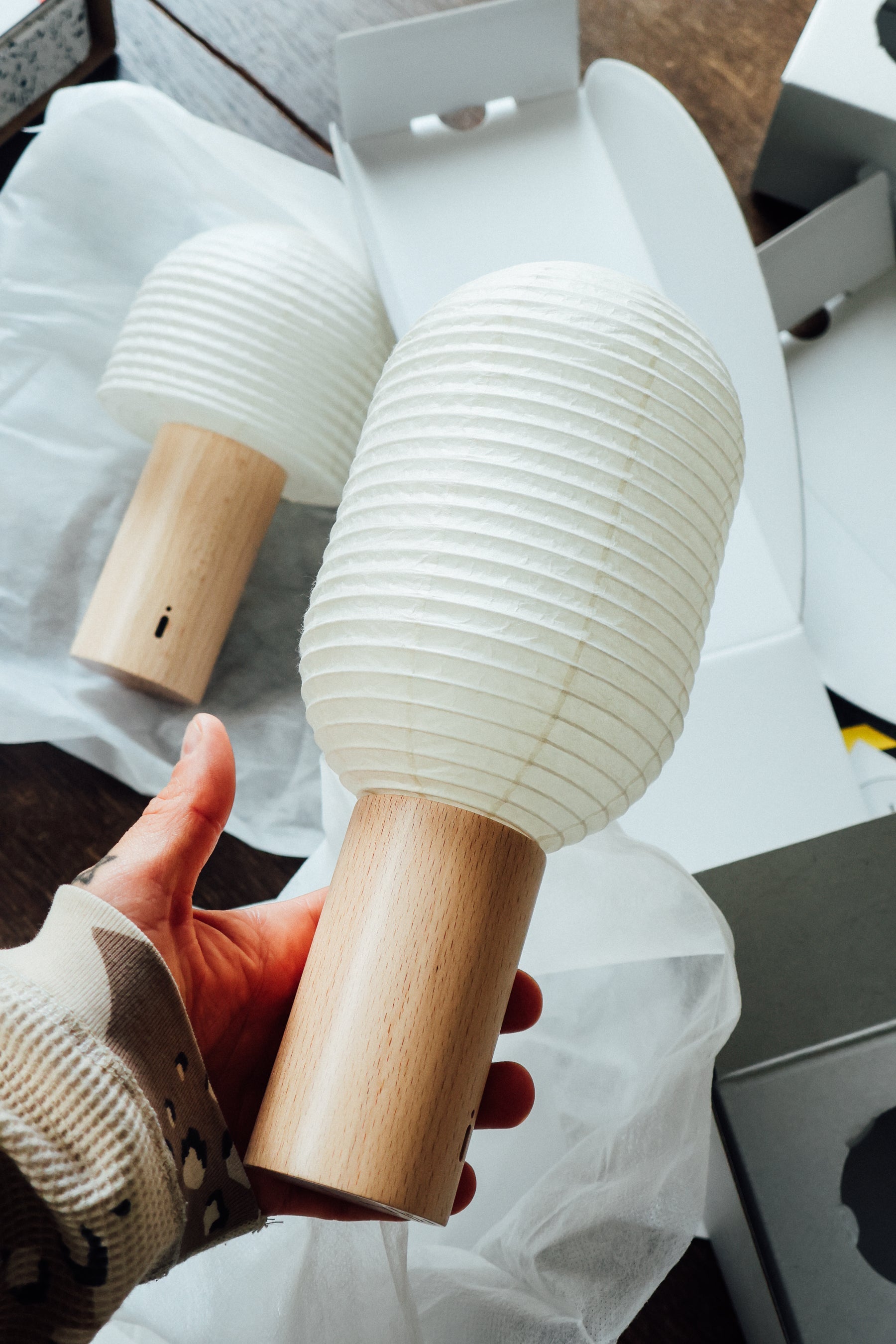





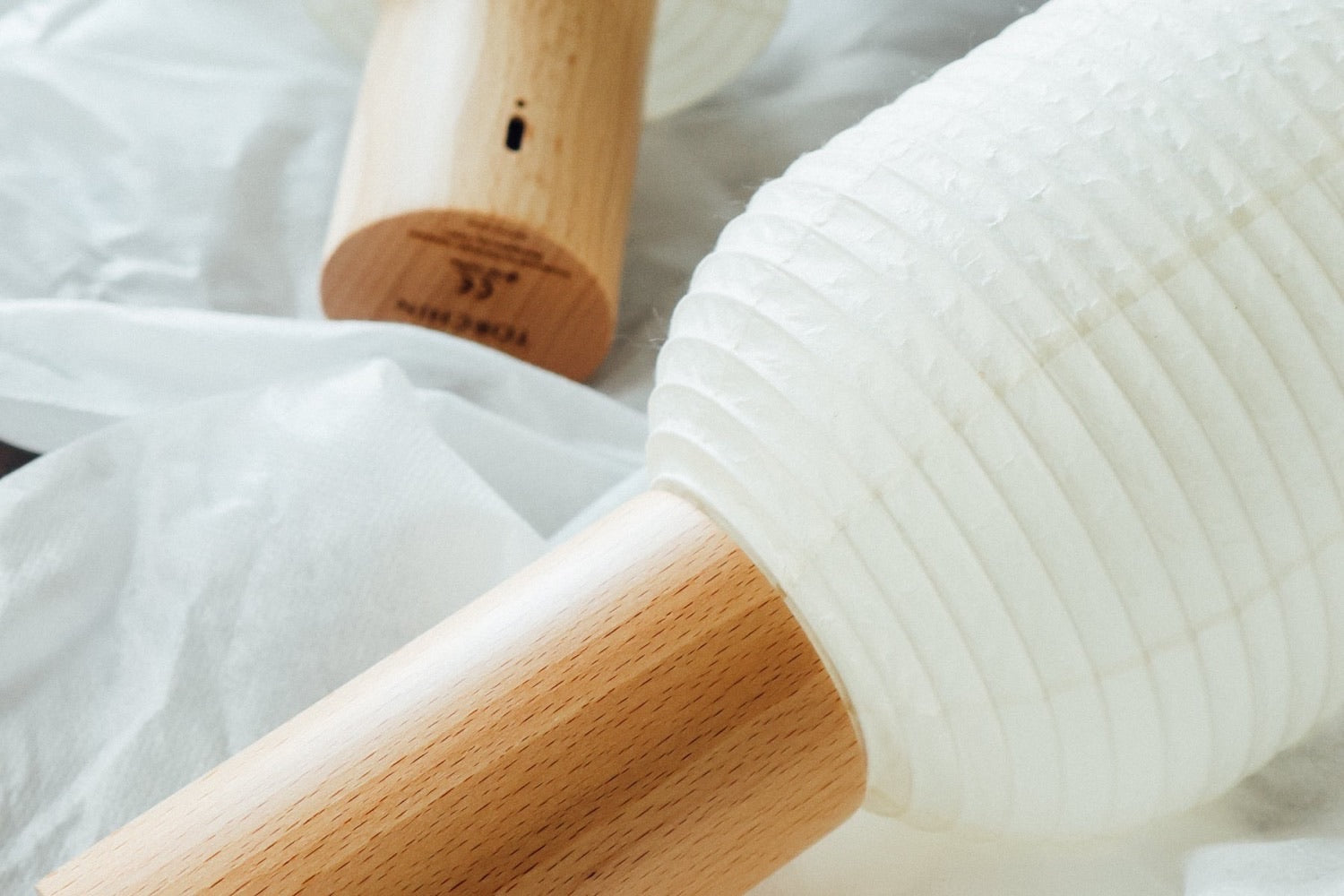
Washi is traditional Japanese paper, handmade for over a thousand years. Strong, translucent, and alive, it dresses everything from calligraphy to sliding doors and lanterns. It’s what gives Japanese lamps their uniquely soft light. An overview of this exceptional paper.
À découvrir
What is washi paper?
The word washi literally means Japanese paper. Unlike industrial paper made from wood pulp, washi is made from long plant fibers, mainly kozo (paper mulberry), sometimes mitsumata or gampi. These long intertwined fibers give washi its remarkable strength and beautiful translucency. Its handmade production is listed as intangible cultural heritage by UNESCO.

How it is made
Traditional production is entirely manual. The fibers are cooked, beaten, then suspended in water. The artisan dips a screen into this mixture and moves it back and forth, a technique called nagashizuki, to spread the fibers and form an even sheet. The sheet is then pressed and dried. Every gesture matters, and no machine truly replicates this craftsmanship.
Why washi is unique
Washi has three rare qualities. It is surprisingly strong and durable, to the point that some washi documents have lasted centuries. It is translucent, making it the ideal material for filtering light. And it ages well, gaining character rather than deteriorating. That’s why it’s found in shoji screens, lanterns, art restoration, and calligraphy.
The washi in our TORCHIN lamps
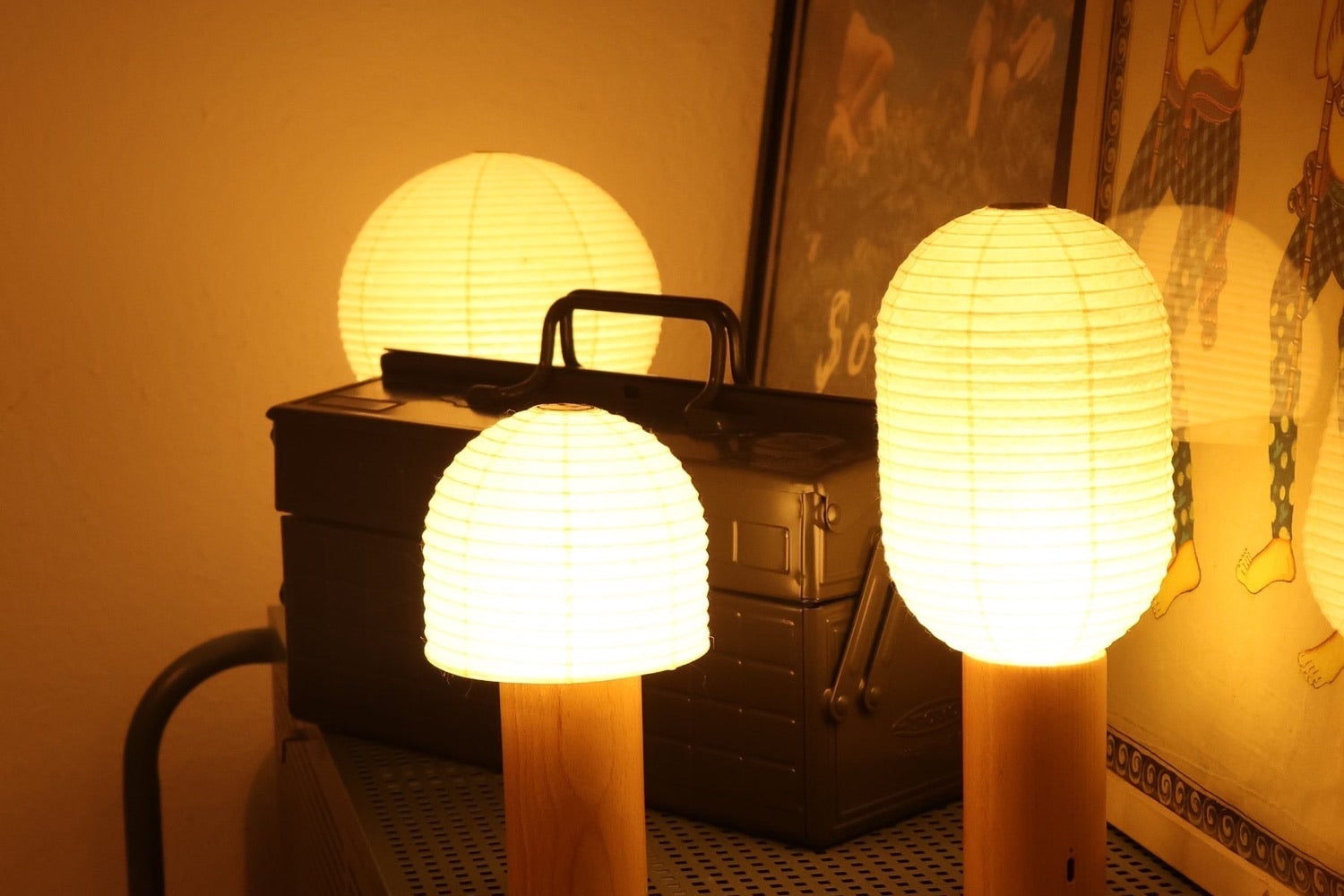
Our TORCHIN lamps, crafted by the Shiraki Kougei workshop in Yame, are covered with handmade Yame washi, woven by an artisan recognized as a Living National Treasure by the Japanese government. Stretched over a spiral-wrapped bamboo frame, this paper emits a warm and enveloping light, whereas silk would give a cooler light. This is the art of the Yame lantern, preserved for nearly two hundred years.

Washi and light
If the Japanese lamp is so appealing, it’s thanks to washi. Its slightly irregular surface and visible fibers catch and soften the light, creating a warm glow impossible to achieve with a classic lampshade. When lit, a washi lamp does not show a bulb but a material that radiates. We discuss this in more detail in our guide to the Japanese washi paper lamp.
Washi or rice paper?
These Japanese papers are often called “rice paper,” but this is a misnomer. Washi is not made from rice: it comes from bark fibers, mainly kozo. The term “rice paper” can be confused with other Asian papers. For a lamp, it is indeed washi, and that is what makes all the difference in quality and light.
Uses of washi
Beyond lamps, washi has accompanied Japanese life for centuries. It is found in sliding shoji screens, calligraphy and painting, bookbinding, origami, fans, and also in the restoration of artworks in the world’s greatest museums, which appreciate its stability and fineness. One paper, a thousand uses.
Frequently asked questions
What is washi paper made of?
Made from long plant fibers, mainly kozo (paper mulberry), sometimes mitsumata or gampi, shaped by hand.
Is washi strong?
Yes, much more than ordinary paper thanks to its long fibers. It is known for its durability.
Why is washi used for lamps?
Because it is translucent and diffuses light, making it soft and warm without dazzling.
What kind of washi covers the TORCHIN lamps?
A handmade Yame washi, woven by a craftsman recognized as a Living National Treasure in Japan.
To go further: the guide to the Japanese washi paper lamp. Discover our TORCHIN lamps made with Yame washi.

Leave a comment
This site is protected by hCaptcha and the hCaptcha Privacy Policy and Terms of Service apply.