







Rice cooker 8/10 persons
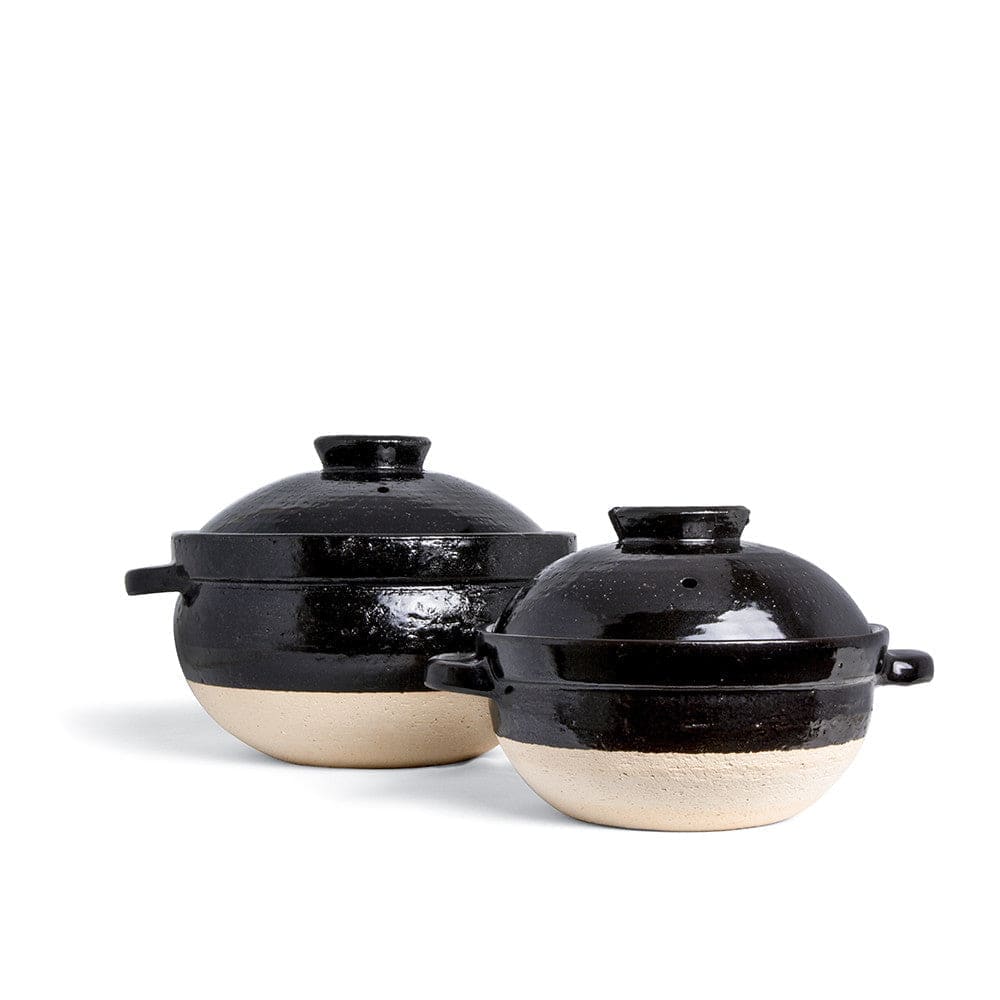
KAMADOSAN 5-cup Iga clay rice cooker, designed by Nagatanien for 8 to 10 people, 26 cm diameter. Patented double lid that eliminates the need to monitor cooking while reproducing the texture of rice cooked in a traditional donabe.


KAMADOSAN 5 GO
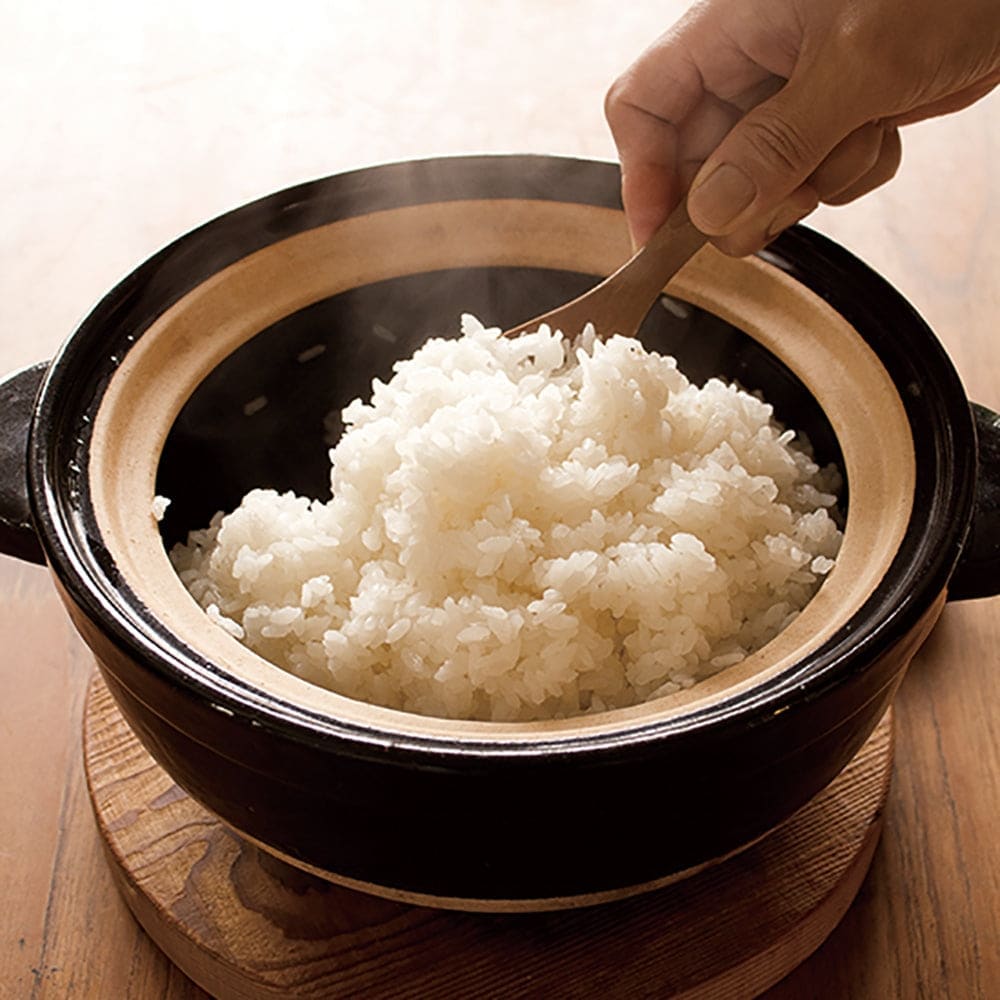
Rice cooker made by Nagatanien, designed to satisfy professionals and serious enthusiasts. It has been developed to recreate the taste of rice traditionally cooked in a "donabe." This taste and texture of well-fluffed, shiny rice have been forgotten since the arrival of the convenient electric rice cooker...
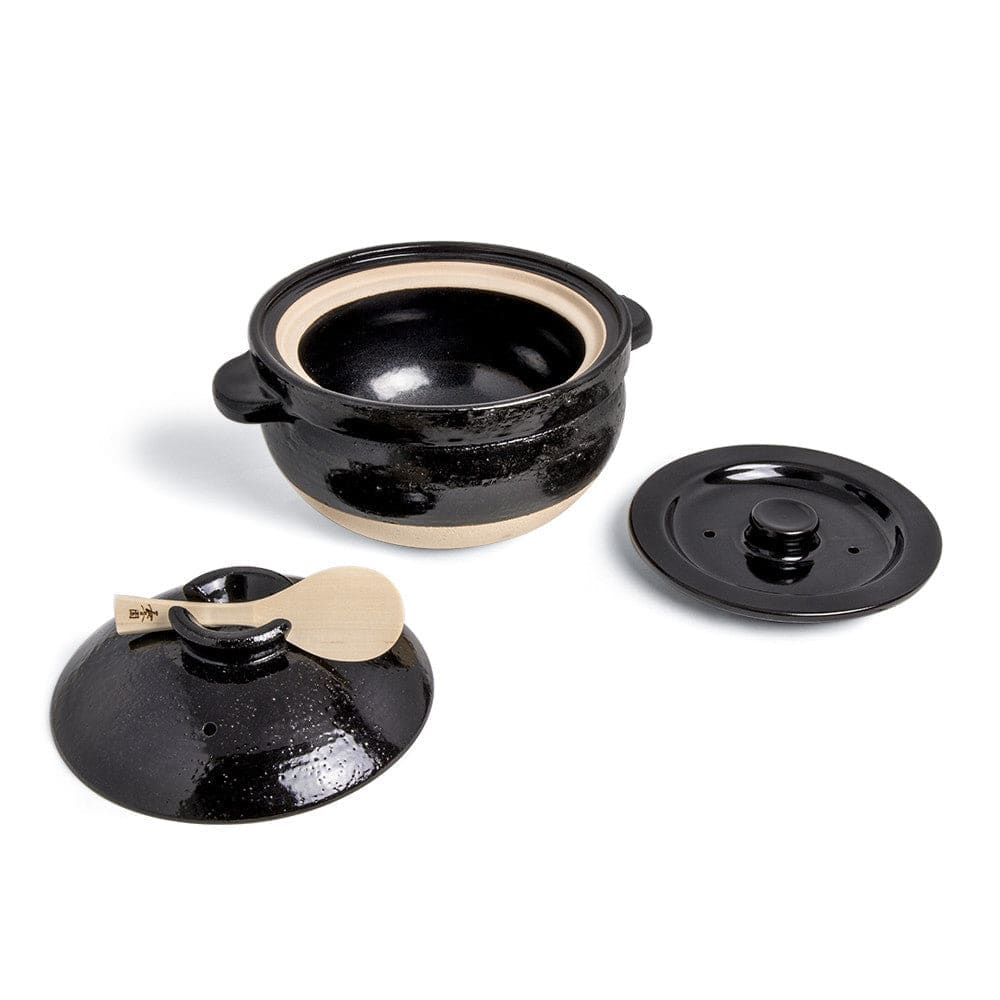
Iga clay, known as "the breathing clay," allows a gentle rise in temperature and good heat retention, but in a traditional "donabe," this cooking requires constant attention to prevent the water from boiling over. The "Kamadosan" is the result of over 3 years of research to avoid this delicate monitoring. It combines this Iga clay with a glaze and features a double lid system with a number of cleverly placed holes...
This way, you will achieve at home that shiny, well-fluffed rice that you will be happy to bring to the table. A joy to share with family and loved ones!
- Cooker supplied with its trivet and wooden spatula
- Heat source: Gas only
Original instructions and recipe ideas in Japanese. Instructions for plain rice in French.
WARNING: please read the usage and care precautions carefully before first use.
THE MANUFACTURER AND IGA CLAY
Nagatanien, founded in 1832, is the largest maker of Iga-yaki pottery (traditional Japanese pottery dating back to the 7th century). Their goal is to keep Japanese culinary art alive while adapting to modern life. Their donabe is a bestseller that has received the Good Design Award in Japan in 2005.
Historically, the Iga region was a lakebed. Its unique clay is composed of very ancient lakebeds that create air bubbles during cooking. These air bubbles allow the Iga clay to breathe and retain heat better than any other clay. Moreover, this clay withstands very high temperatures; that is why the donabe can be placed directly on the flame without cracking.
HOW TO MAKE "OKAYU"?
Iga clay has many pores that need to be sealed before first use by making "okayu." This cooking releases the rice's "starch" to waterproof the inner wall.
- Fill with water up to 3/4 and add already cooked rice (about 200g for the Kamadosan 5/6 persons)
- Once the okayu is ready, turn off the heat and let it cool for a little over an hour before removing the rice. Wash the donabe.
Okayu is eaten with condiments (salted plums...) or mixed with an egg...
Also explore: Kamadosan, Japanese Cookers and Cuisine.
Features
- Dimensions
- diameter 26 cm
- Weight
- 5000 g
- Material
- Ceramics
- Color
- Black
- Capacity
- 5 GO (900 ml uncooked rice)
- Origin
- Iga, Japan
- Rewards
- Good Design Award 2005
Use & Care
Do not soak in water
Wash with water and dish soap
Do not put in the dishwasher
Dry thoroughly upside down so the bottom dries well (risk of mold)
Do not cool abruptly by placing the hot cooker on a cold surface or running it under cold water (risk of cracks)
Handle with oven mitts while the cooker is hot
Never place on a flammable surface
Do not use for frying (since the clay is porous, oil could drip onto the fire)
Wash the donabe well with water, dry thoroughly, and let it dry upside down
Stir and close only the outer lid. Cook over low heat until boiling. Then slightly move the lid to prevent overflow and let it cook gently.
A land that breathes, a warmth that takes its time
In Iga, the soil is called "the breathing earth." It allows for a gentle rise in temperature and good heat retention. In the past, houroku was made there, a tool placed on the fire, highly resistant to heat and able to transmit it to the core of the food. Nagatanien draws inspiration from these ancient properties for its cookers, including the Kamadosan, the result of over three years of research. The outcome is captured in a simple gesture: a dish that cooks slowly and then arrives at the table just as it is.
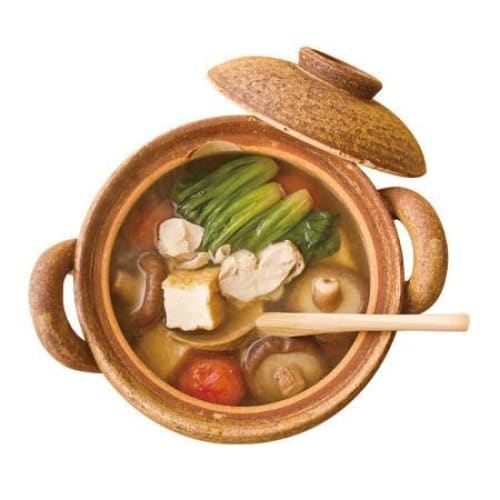
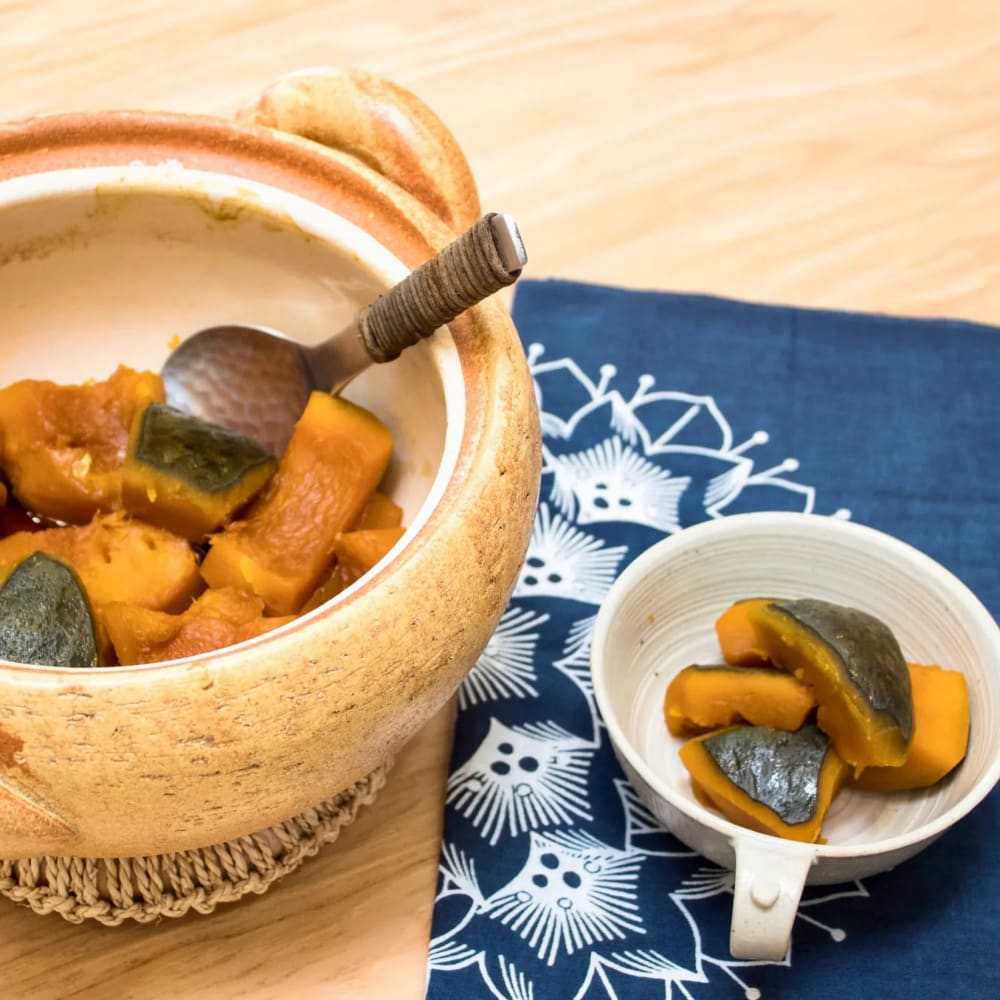
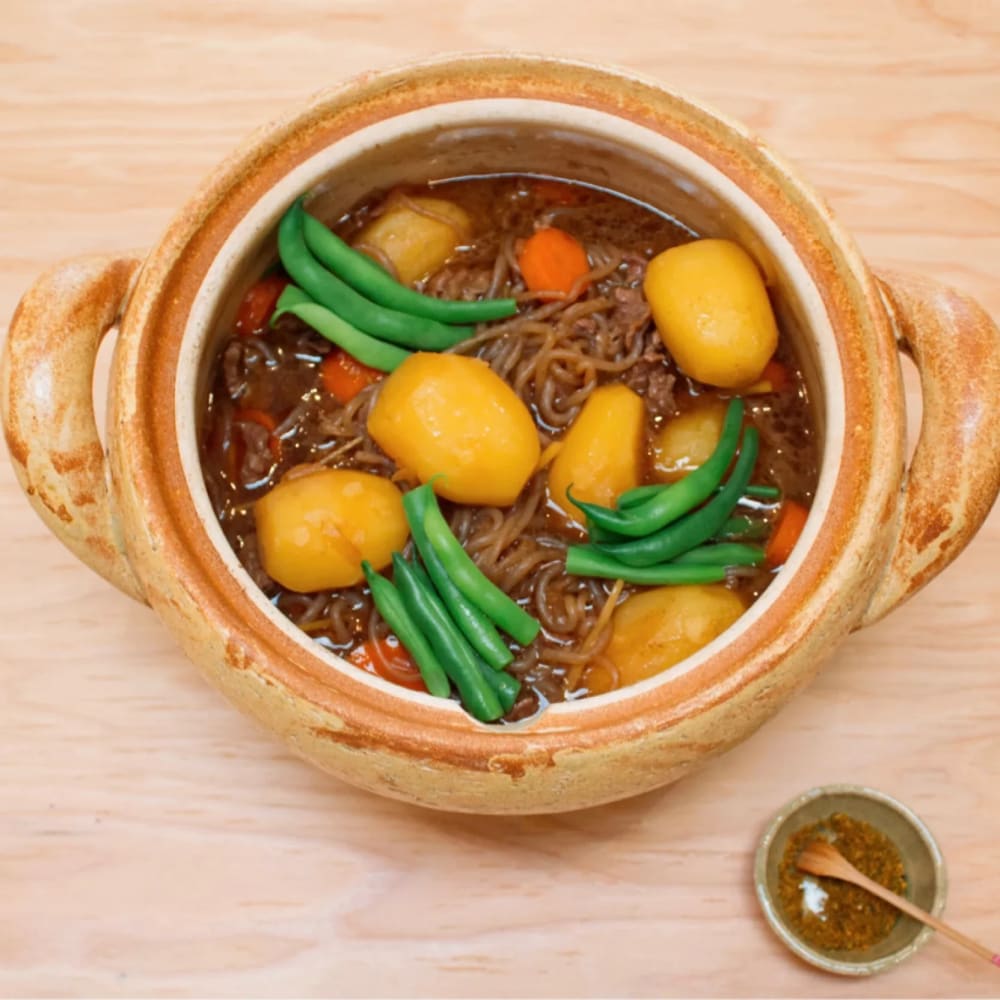
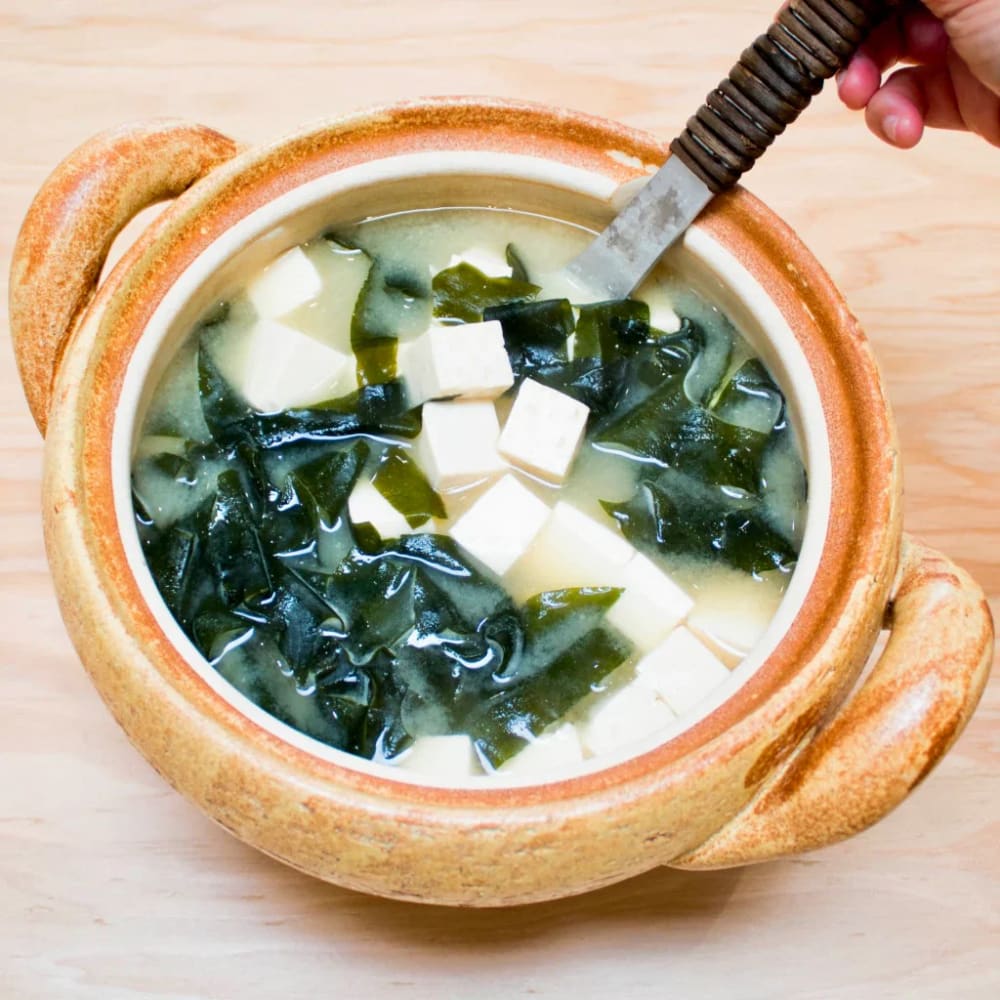
Expertise
What a donabe made of Iga clay changes
The land of Iga
The Kamadosan is made from Iga clay, known as "the breathing earth." It allows for a gentle rise in temperature and excellent heat retention.
Slow cooking
The heat spreads evenly and reaches the core of the food. The ingredients slowly develop umami without breaking down.
The lasting heat
Once heated, the donabe stays hot for a long time. The dish continues to cook off the heat and arrives at the table still warm.
The Legacy of Houroku
In Iga, they produced the houroku, a utensil placed on the fire. Nagatanien incorporates this heat resistance and gentle heat transfer into its cookers.
Three years of development
The Kamadosan combines Iga clay and glazing, with a double-lid system pierced with carefully placed holes. It took more than three years of research to cook rice without constant supervision.
An everyday object
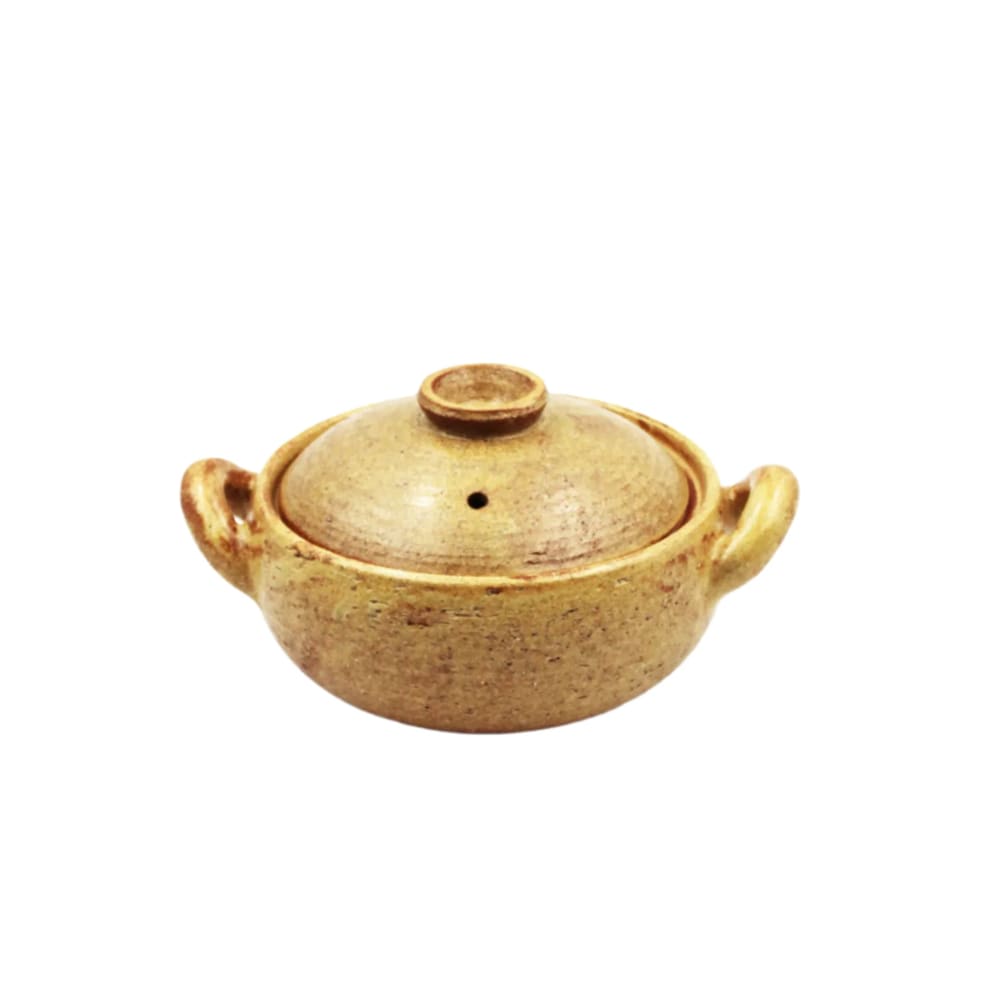
At Nagatanien, every cooker is used daily. The Fukkurasan, for example, goes from cooking to refrigeration and then to presentation: the lid and the dish are also used at the table, rather than sitting unused at the back of a cupboard.