




Japanese apron - Shibori tornado dye
The ANYTHING maekake apron is made of woven cotton (canvas No. 2), hand-dyed using the traditional Nagoya shibori tatsumaki technique. It ties around the hips with a 260 cm belt and fits waist sizes up to 95 cm.


MAEKAKE - SHIBORI TORNADO DYE
A maekake apron with the traditional Arimatsu shibori tie-dye from Nagoya. Dyed using the tatsumaki (tornado) technique on No.2 cotton canvas. Each piece is dyed individually, so no two patterns are alike.
The Maekake is a traditional apron used since the Edo period. It is worn around the hips to protect the body.
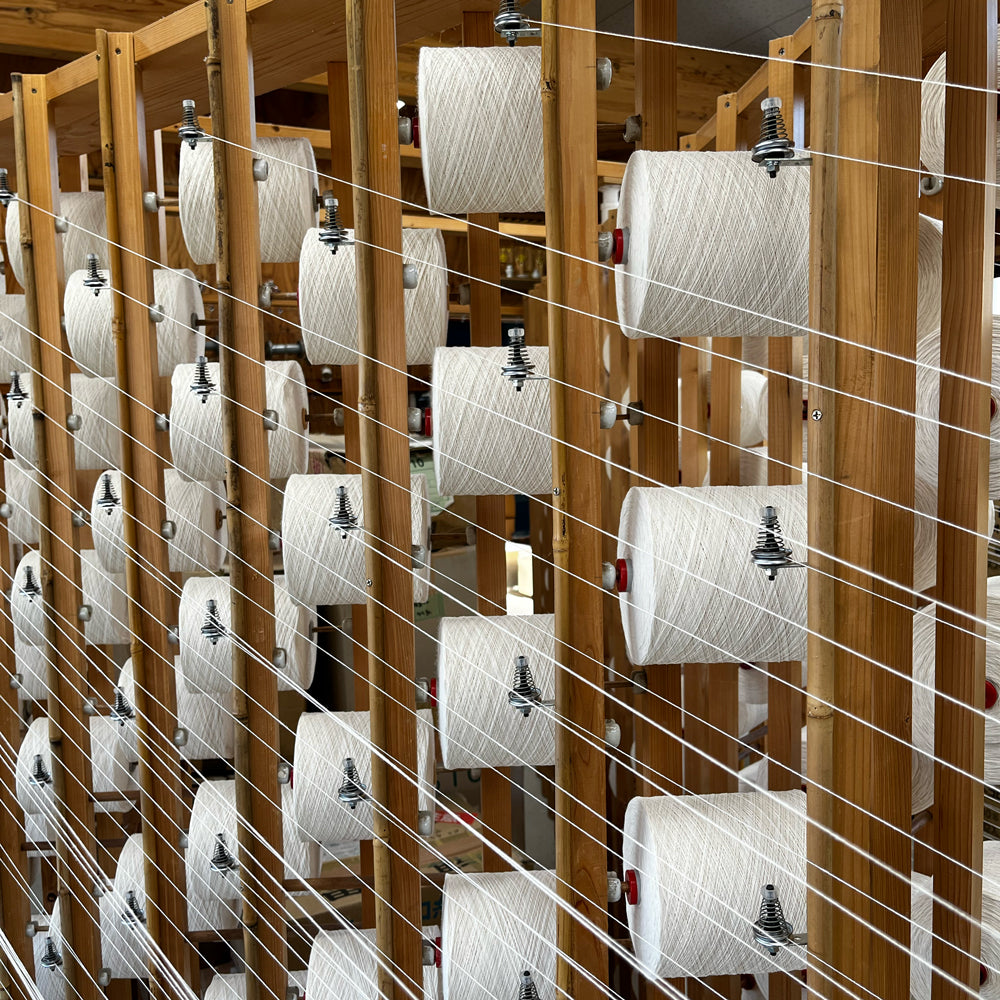
Our maekake aprons are woven using a 100-year-old shuttle loom made by Toyota.
- Belt, 260 cm (fits waist sizes up to 95 cm)
ANYTHING
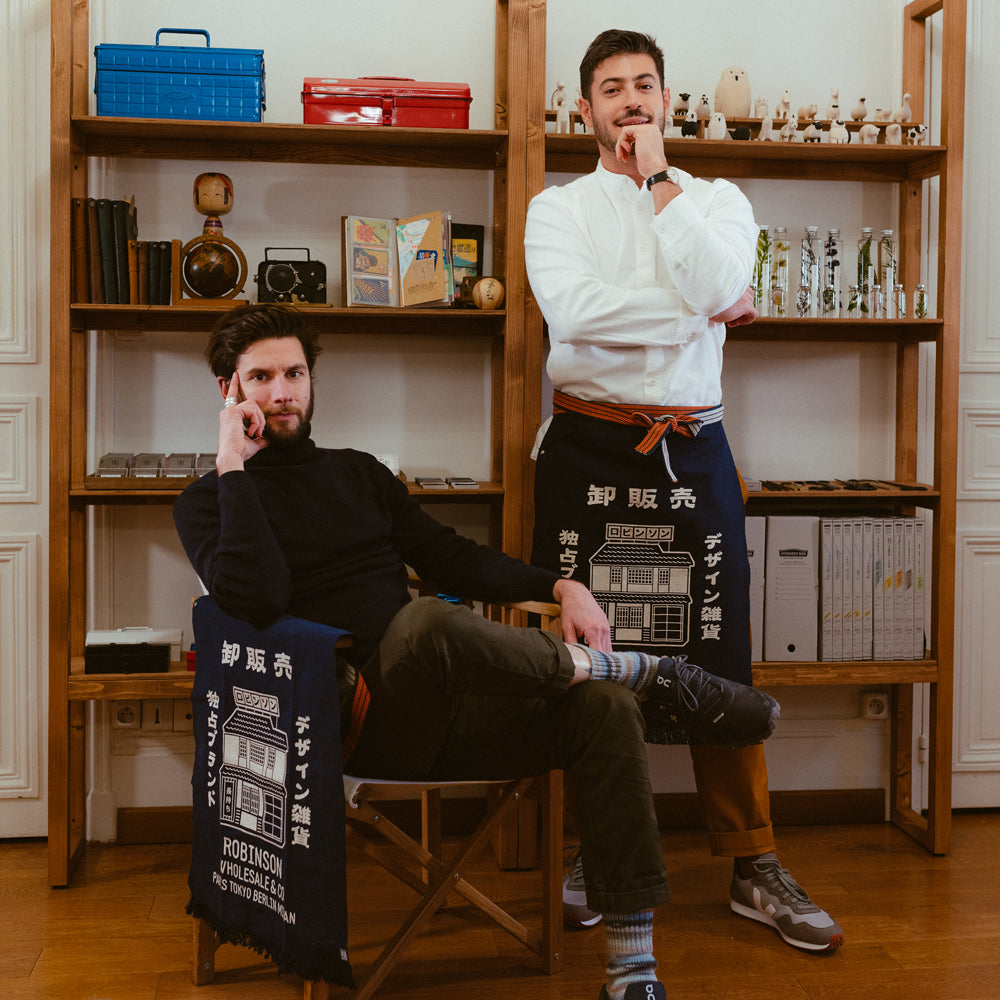
Founded in 2000 by entrepreneur Kazuhiro Nishimura, Anything has been making maekake since 2004. The company still uses the traditional production method in Toyohashi, Aichi Prefecture, which is the last and only production site in Japan. It houses nine shuttle looms that are 80 to 100 years old, continuing to produce authentic, high-quality MAEKAKE for Japanese people and the world.
Also explore: ANYTHING, JAPANESE MAEKAKE APRONS and Cuisine.
Features
- Dimensions
- 67 x 47 cm (fringes included)
- Weight
- 260 g
- Material
- Cotton
- Color
- Blue
- Origin
- Toyohashi, Japan
Use & Care
Do not tumble dry.
Do not wash in warm water.
Wash separately from whites as the dye may transfer to other fabrics. May shrink slightly after washing due to the nature of the fabric.
Japan's last maekake workshop
The maekake has been worn since the Edo period, tied around the hips to protect the body.
Manufacturing
How is a maekake made?
Shuttle weaving
Each fabric is woven on a century-old Toyota shuttle loom. The company has been making maekake using this traditional method since 2004.
Canvas No. 1
This is the highest quality woven cotton from the workshop. It is used in particular for the Anything logo and the plain models.
Arimatsu Shibori Dyeing
The Tornado model is tied and then dyed using the Tatsumaki process, derived from the Arimatsu tied dyeing technique of Nagoya.
Patterns and symbols
Some aprons feature the portrait of a kabuki character by the ukiyo-e artist Sharaku. Others display the character 縁, which evokes the connection between people.
The 260 cm belt
It wraps around the hips, then ties, and fits up to a 95 cm waist circumference.
A use born in Edo
The maekake has been used since the Edo period, tied around the hips to protect the body while working. Today, it is worn both in the kitchen and in the workshop.