











Rollerball Pen - Classic Renaissance - KAZARI KANAGU ORCHID
Frequently bought together
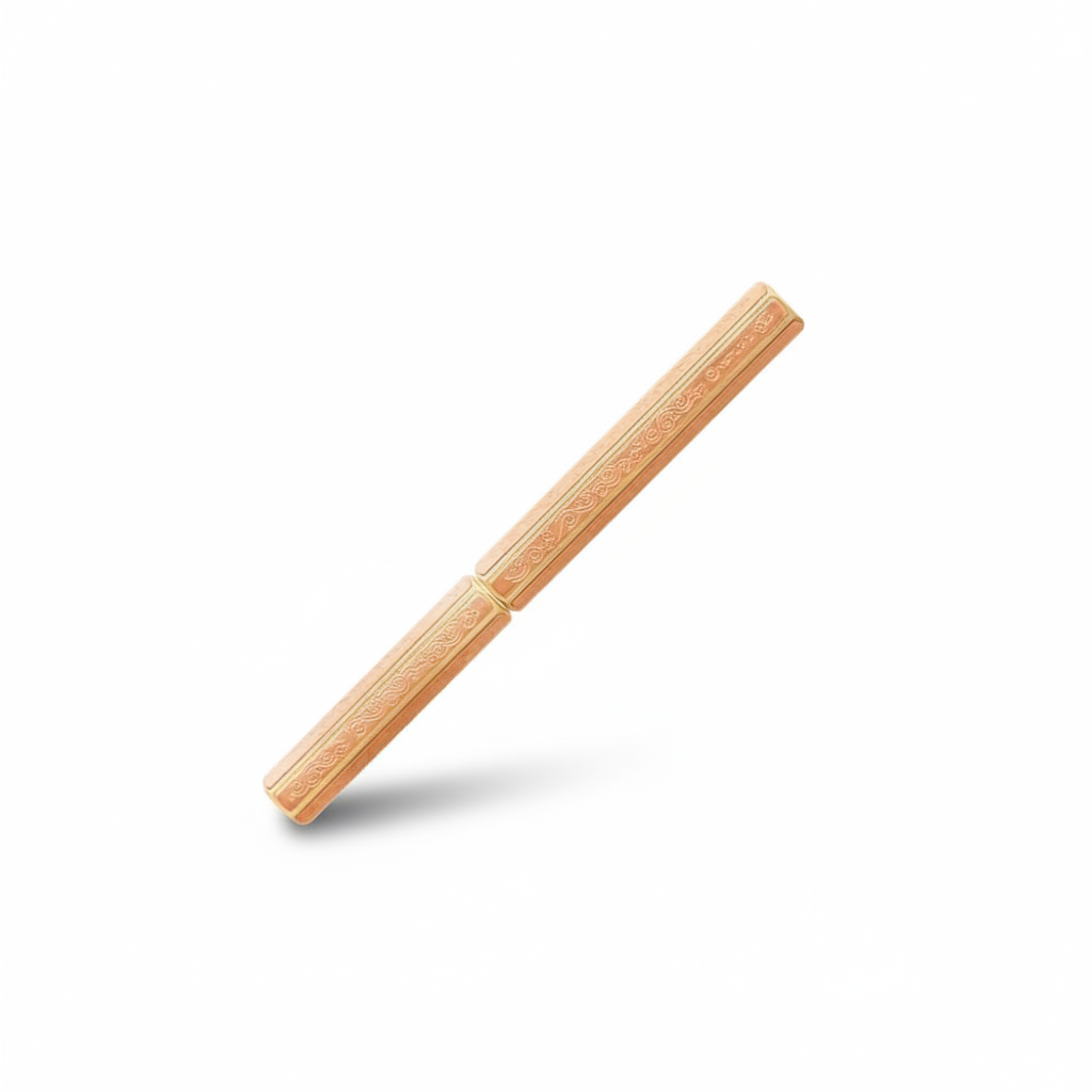
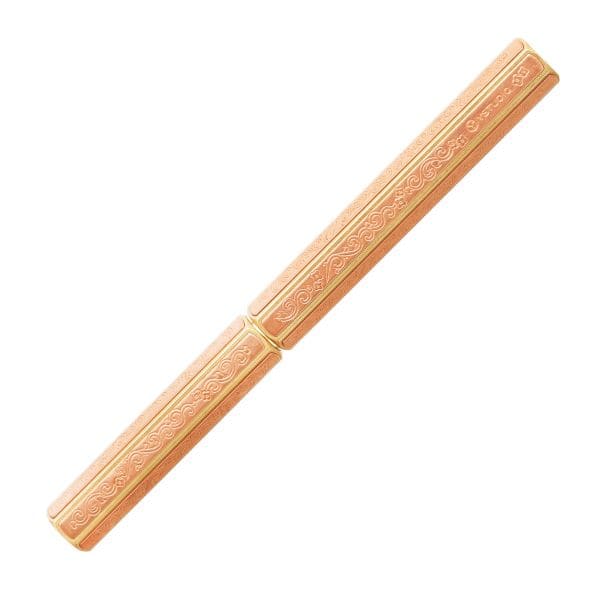
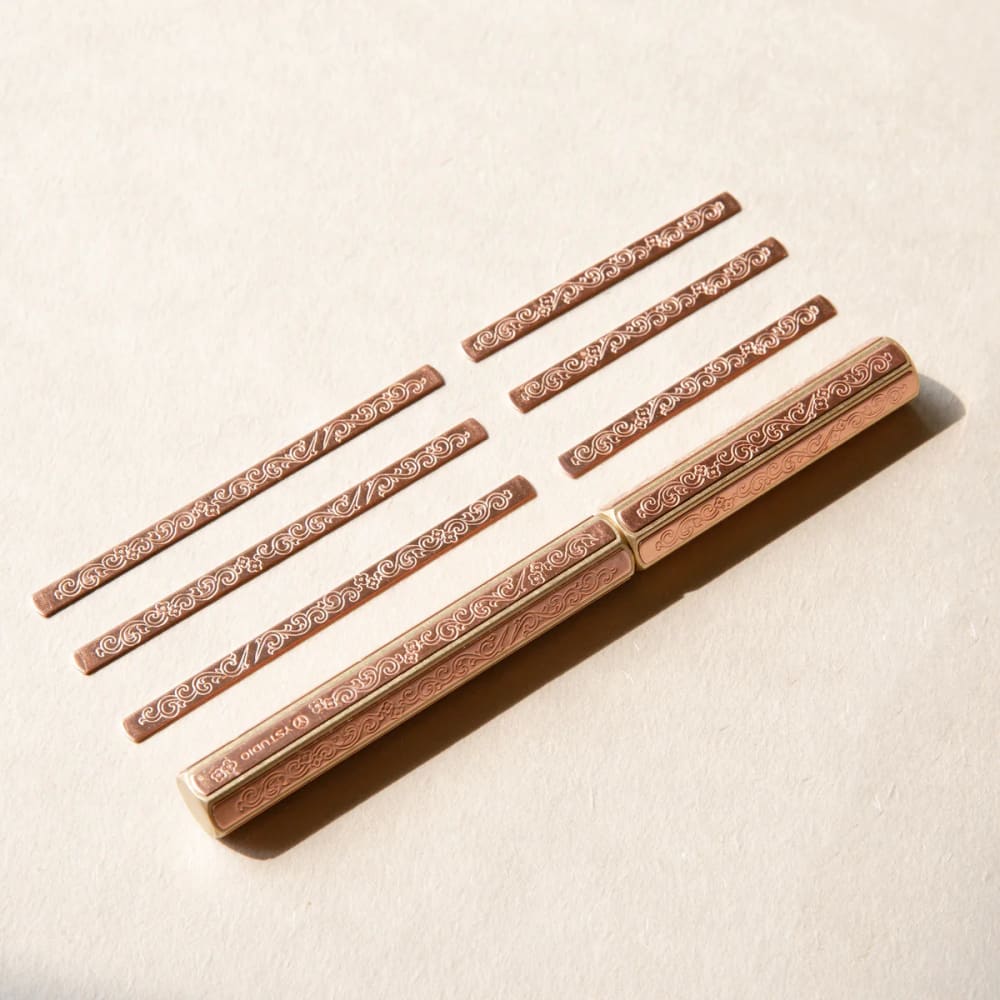
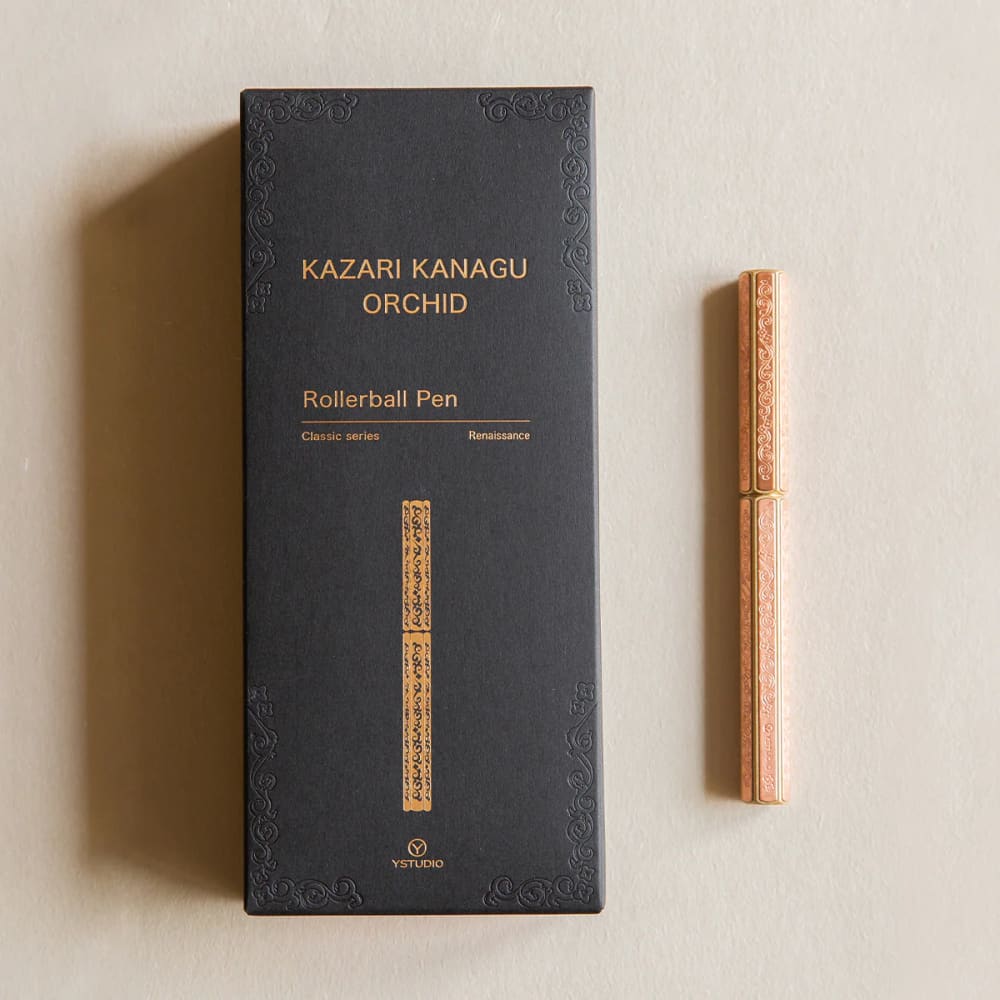
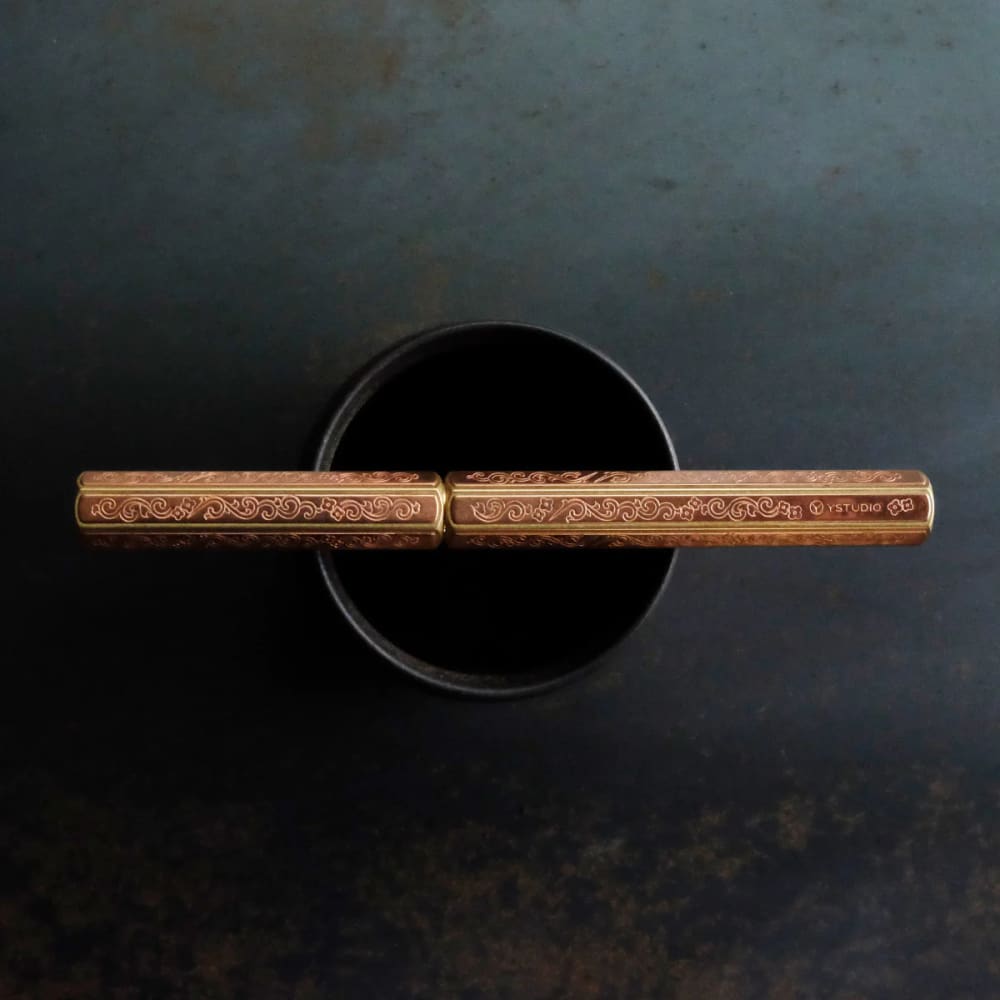
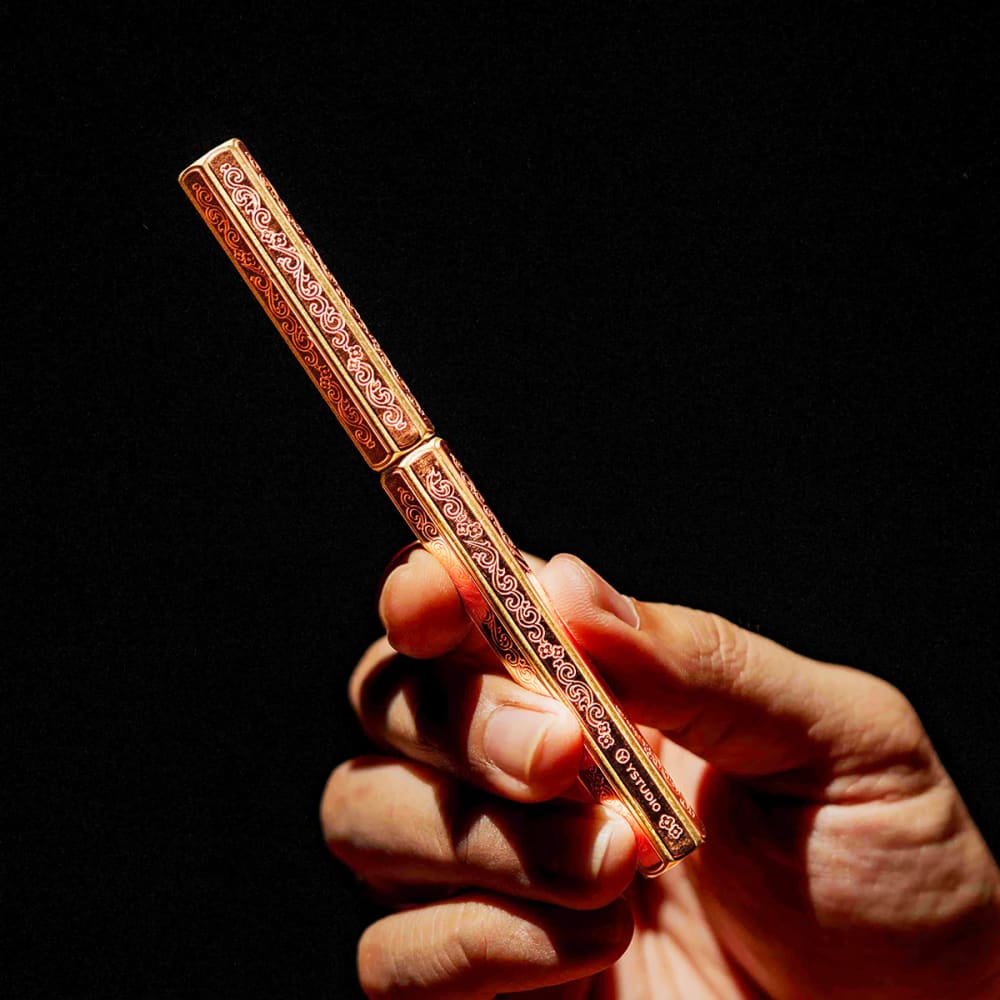
ystudio Classic Renaissance KAZARI KANAGU Orchid rollerball pen, body decorated with orchid motifs engraved on copper sheet according to traditional Japanese metal craftsmanship. Size 11.2 × 11.9 × 130.7 mm, arabesque design around the orchid, a flower symbolizing elegance in Taiwan.


Perpetuating the Legacy of Artisans - "錺 KAZARI KANAGU"
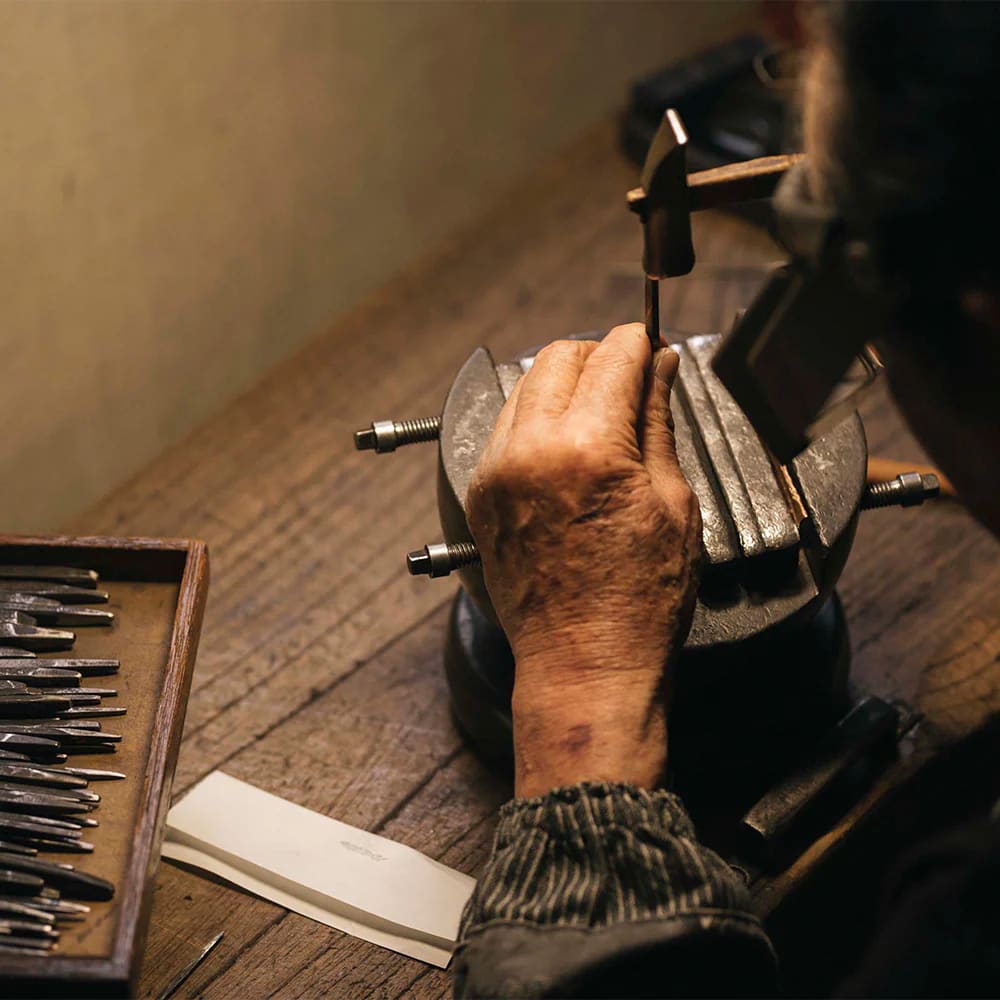
錺, metal craftsmanship, is often used for Buddhist devotional objects. As people's lifestyles change, this traditional craft of metal accessories has gradually developed a new design aspect beyond its original use in decorating temples, shrines, Buddhist altars, mikoshi, etc., allowing the art of metal engraving to become part of people's daily lives.
YSTUDIO used orchids, a flower symbolizing elegance in Taiwan, as the design theme for the Kazari Kanagu rollerball pen, combined with arabesque motifs engraved on the copper sheet inlaid into the pen body. Through the combination of centuries-old craftsmanship and writing instruments, you can witness our dedication and the lifelong dedication of Japanese artisans, and together, we can convey the weight of words.
Every intricate detail of the engravings tells the story of Japan's centuries-old craftsmanship. As you hold the pen, our goal is to convey the spirit of craftsmanship and the evolution of culture to every user, continuing to write a new chapter in classical art.
THE ARTIST
Japanese Decorative Metalwork
KAZARIKANAGU TAKEUCHI by Naoki Takeuchi
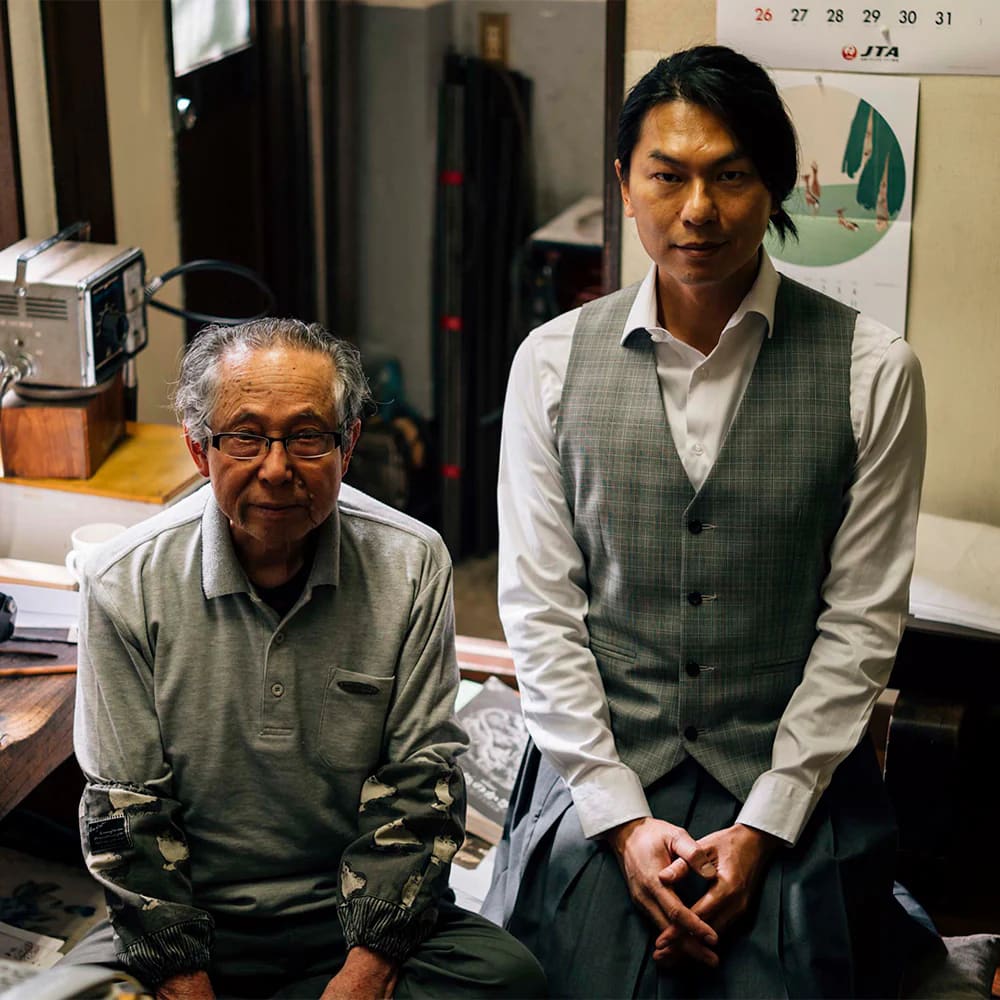
Born in Kyoto in 1982, Mr. Takeuchi is responsible for producing the family business, KAZARIKANAGU TAKEUCHI, which is primarily dedicated to producing and repairing decorative metal accessories for the hardware of Buddhist altars, shrines, and temples. In 2020, he launched his own brand, "錺之 KAZARINO", and that same year became the representative director of Takeuchi Co., Ltd. The brand's slogan is "Decoration has a mysterious power", aiming to help people live happier lives through decorative accessories while continuing to develop further applications for Kazari Kanagu in various fields.
Ito Metal Engraving Workshop
Established around 1920, this unique manufacturing workshop is located in Nagoya, Aichi Prefecture, Japan. It specializes in the manufacture and hand engraving of gilded metal scissors and is one of the few workshops of its kind in Japan. The current owner and representative is Mr. Mitsuhiro Ito, the third-generation successor.
Mr. Ito was born in 1943 and joined the family business in 1965, where he apprenticed under his father, Mr. Kinjiro Ito. Since then, he has worked diligently behind the scenes, contributing to the production of metal components used in traditional Japanese Buddhist altars, religious articles, shrines, and temples.
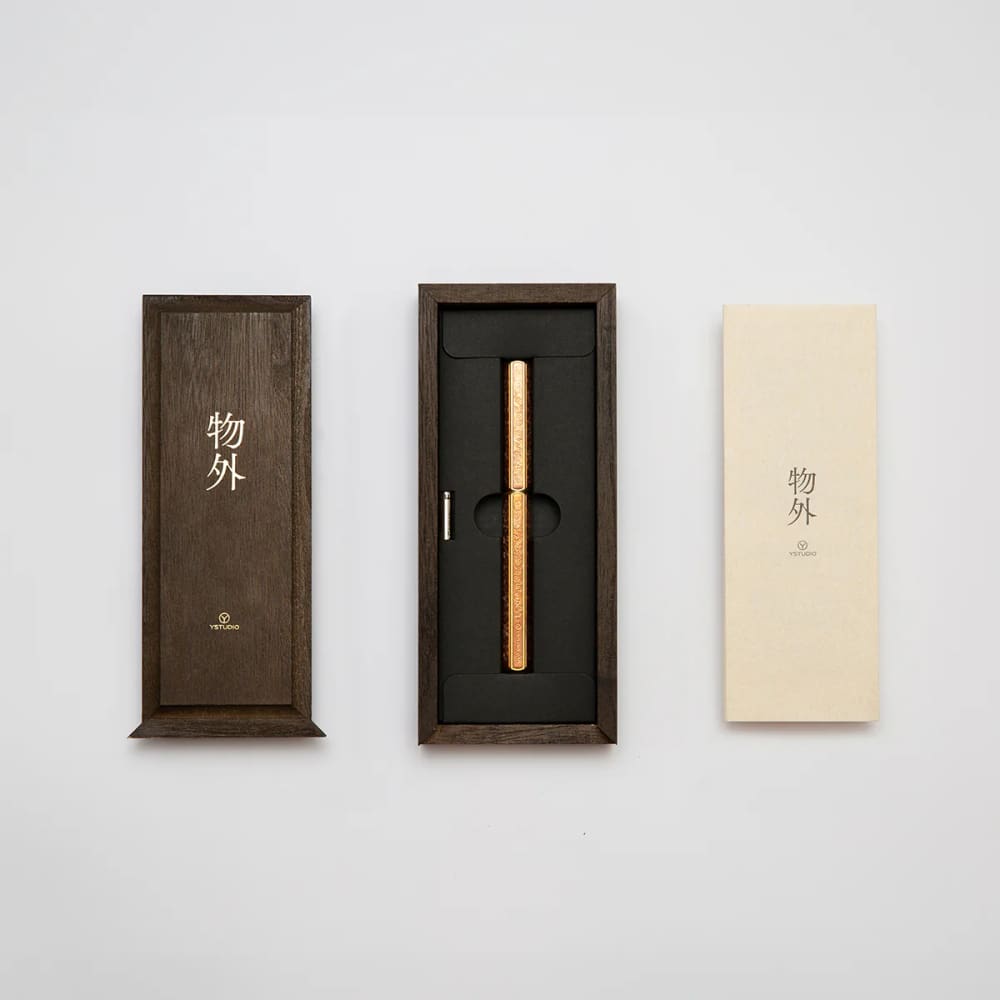
- Box: 77x31x190 mm
- Refill: standard refill (one SCHMIDT Safety Ceramic Roller 5888 F refill included)
- The KAZARI KANAGU rollerball pen (Orchid) won the 2023 Taiwan Golden Pin Design Award
THE WEIGHT OF WORDS
How long has it been since you picked up a pen and wrote from the heart?
By writing to your loved ones or friends, you will rediscover touching feelings, love, and tranquility between the lines. With our love of words and materials, we would like to introduce you to YSTUDIO stationery. Through YSTUDIO, we hope to tell you a story about writing.
Let us set electronics aside for a moment. And rediscover the warmth of writing and the weight of words. Let us write with our most sincere feelings and rediscover the culture of writing that is gradually disappearing.
LEARN MORE ABOUT YSTUDIO
What YSTUDIO creates is not only the object itself, but also the true meaning behind it. They believe that every object embodies a deeper meaning. Through their products, they hope to bring more imagination into people's lives, which is why they design products for everyday use.
YSTUDIO believes that the value of simplicity in design is very important.
Features
- Dimensions
- 11.2 × 11.9 × 130.7 mm
- Weight
- 62 g
- Material
- Brass, Copper
- Color
- Gilded
- Origin
- Taiwan and Japan
- Brand since
- 2012
Designed in Taipei, decorated in Japan
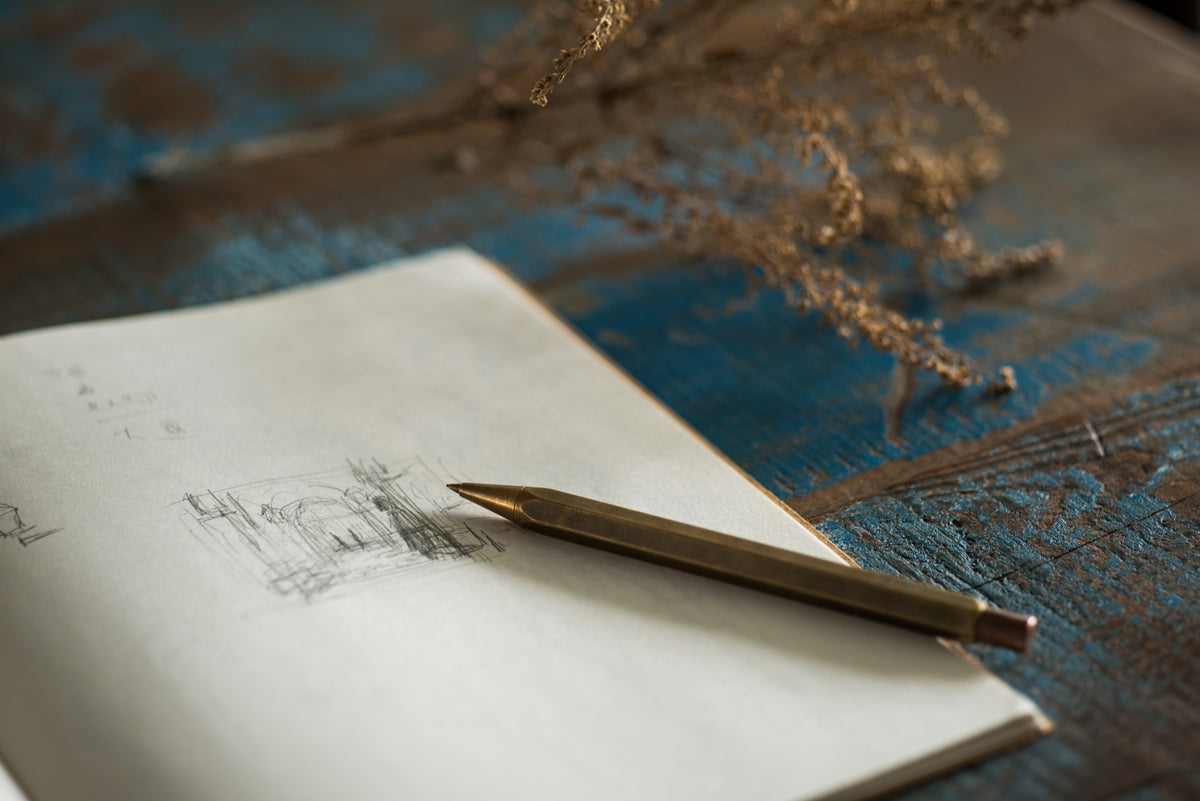
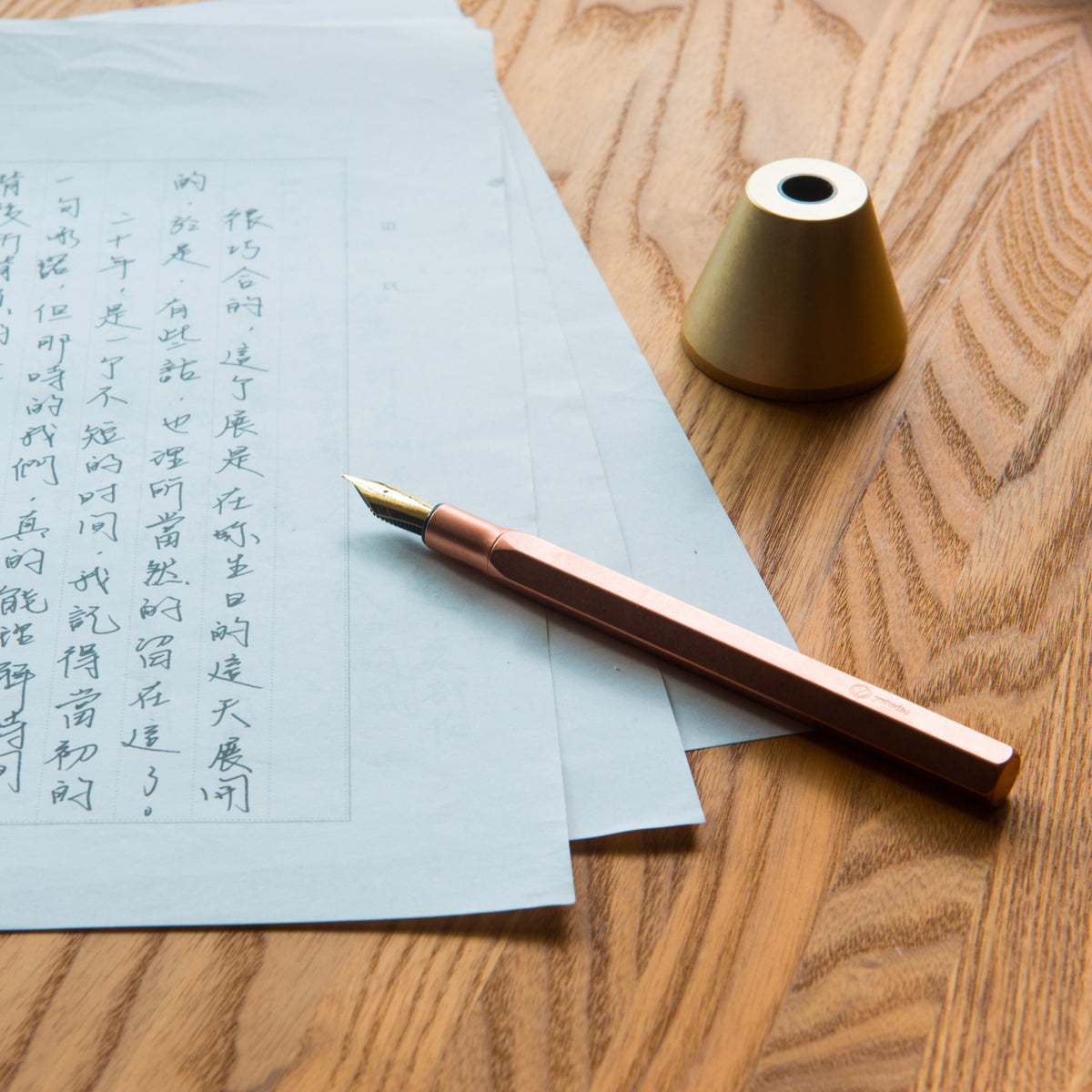
The Classic Renaissance editions were born from encounters between ystudio in Taipei and traditional art workshops in Japan. At Rakugei, Kohei Murata is the third generation in his family to work with foil, a technique his father taught him while he was studying at university. On some pieces, the foil is applied using the flat foil method, inspired by kimono weaving. Others revive the old Unryūhaku, a silver foil discovered in Kanazawa before World War II. Still others feature kazari kanagu, the metal chasing found on temples and Buddhist altars, carried out by the Kazarikanagu Takeuchi workshop in Kyoto and the Ito engraving workshop in Nagoya on a copper foil inlaid into the pen body. Here, the value lies in the gesture made on the metal.
THE CLASSIC RENAISSANCE EXPERTISE
What sets these editions apart
The leaf, not the patina
On these editions, everything depends on the decoration applied to the metal rather than the aging of the bare brass. These surfaces are meant to be admired.
The flat foil of the kimono
Flat foil originally refers to a weaving method used on kimonos. Kohei Murata learned it from his father and has since dedicated himself to applying it to other objects, including these pens.
The old Unryūhaku
This silver leaf was discovered in Kanazawa by the founder of Rakugei, Kohei Murata's grandfather, before World War II. Since the technique is hardly documented, the Murata family is working to revive it.
錺, metal chasing
The kazari kanagu adorned temples, shrines, Buddhist altars, and mikoshi. Here, the patterns are engraved on a copper sheet embedded in the body of the pen.
The orchid and the dragon
The orchid, a flower that symbolizes elegance in Taiwan, is paired with arabesque motifs engraved on the copper. The dragon has its own adornments: a gilded presentation box, a brass ink bottle, and a 14K gold nib on the fountain pen.
Two workshops, two countries
ystudio designs the pen in Taipei, and Japanese workshops decorate it: Rakugei for the leaf, Takeuchi and Ito for the kazari kanagu. The YAKIHAKU pens come in two editions, Heritage and Reborn.