





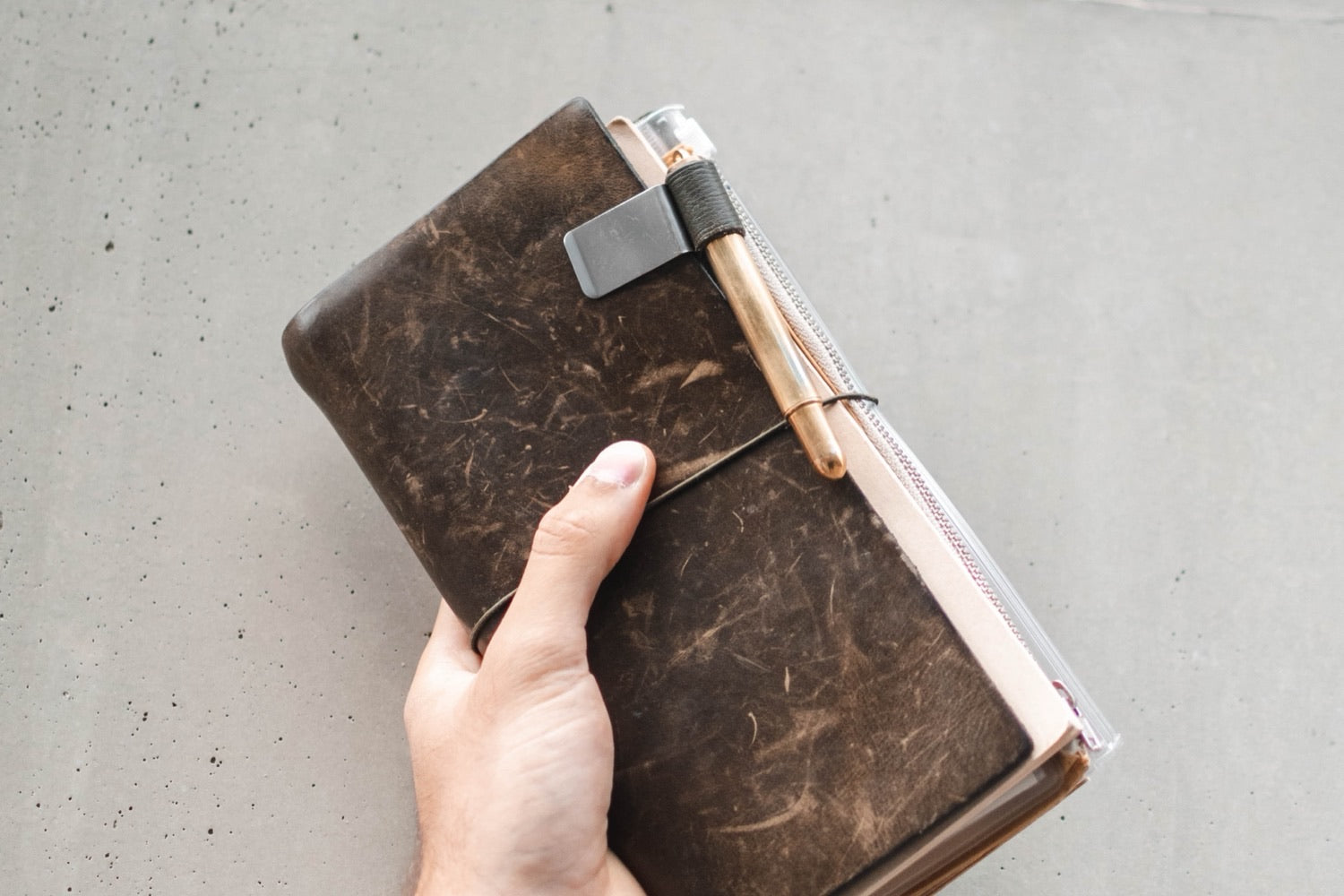
One of the great pleasures of the TRAVELER'S notebook is being able to choose your paper. Whether you write with a fountain pen, draw, or keep a journal, some refills are much more enjoyable than others. Here is a complete overview of the available papers, from Japanese MD paper to specialty papers, with their uses.
À découvrir


MD paper, the brand’s benchmark
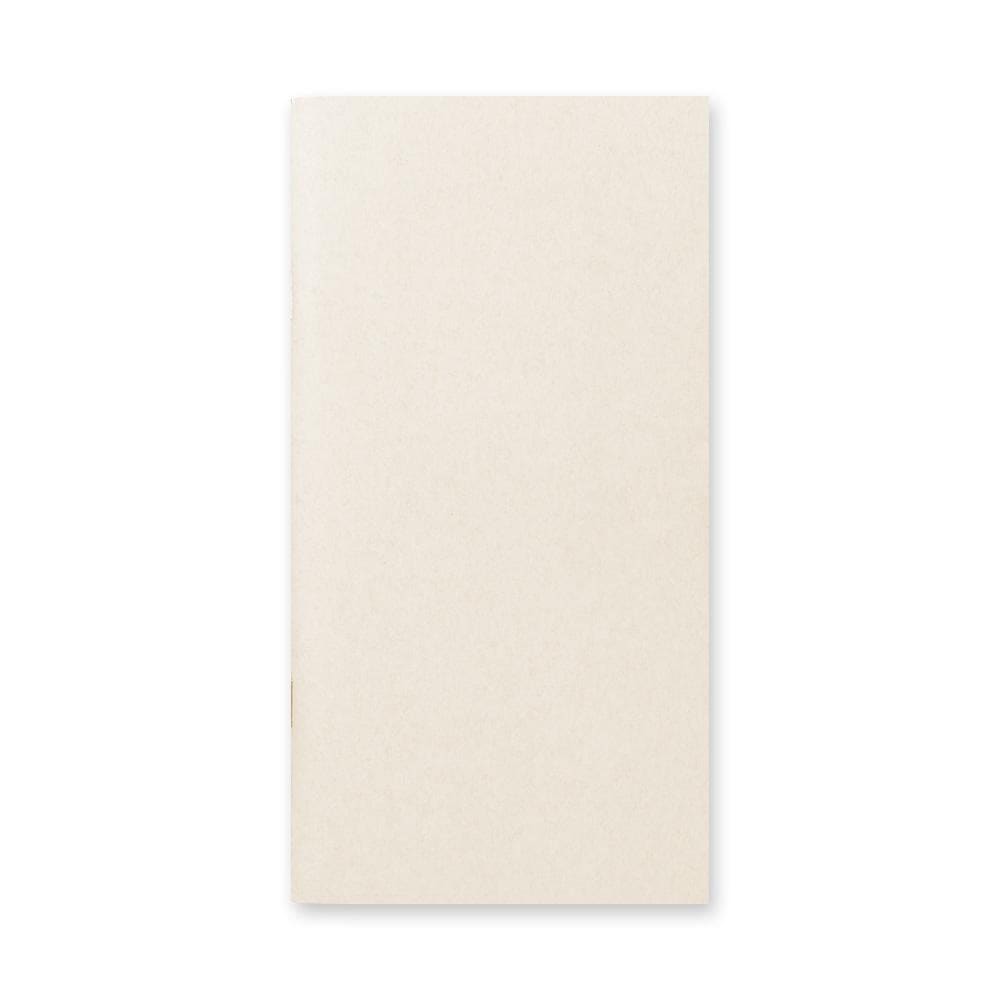
Most refills use MD paper, for Midori Diary, developed in Japan in the 1960s specifically for writing. It’s a paper designed to last and perform well with all kinds of instruments: it resists ink bleed-through, limits smudging, and offers a slight texture that pleasantly grips pencil lead. With a fountain pen, it honors inks without too much feathering, which explains its popularity among enthusiasts.
MD paper comes in several rulings: lined for everyday writing, grid for more structure, dotted for subtle guidance, and completely blank for free drawing. Everyone can choose according to their writing or drawing style.

White or cream?
MD paper comes in two shades. The white paper faithfully and brightly reproduces ink colors, ideal if you like colored inks. The cream paper, slightly warmer, is gentler on the eyes during long writing sessions but slightly alters color rendering. It’s a matter of taste and comfort.
Specialty papers
Beyond MD paper, the range offers papers designed for specific uses. This is where the refill system really makes sense: you insert the paper suited to what you want to do.
Thin paper
Very light, around 52 grams, this paper allows many more pages to be included in a single refill without thickening it. Despite its thinness, it resists ink bleed-through well, making it a favorite among fountain pen users and heavy writers.
Kraft paper
With a brown and natural tint, this paper highlights light inks and gels, especially white inks that stand out beautifully. It holds up well to wetter tools like markers and gel pens.
Sketch paper
Thicker and with a smooth surface, it is suitable for pencil, ink, and dry techniques. Its sheets are perforated for easy detachment of finished drawings.
Watercolor paper
Thick and textured, it resists water and washes without warping excessively. Perfect for painting, also with perforated sheets.

How to choose according to your use
For everyday writing, lined or dotted MD paper is more than enough. For fountain pens and long sessions, fine paper is unbeatable for its capacity. For drawing, use sketch paper, and watercolor paper for painting. And nothing prevents combining: many users insert a writing refill and a drawing refill in the same cover, connected by a connecting band. To learn how to assemble them, see customize your notebook.
Weight and transparency
A word about weight, meaning the paper's thickness. Thick paper like sketch or watercolor better withstands water and wet techniques but takes up more space. Thin paper like 52 grams offers many more pages in the same thickness, at the cost of slight transparency: you can see some writing through the page, which does not bother most uses. If you write on both sides with a fountain pen, prefer standard MD paper or fine paper, both designed to limit ink bleed-through.
Frequently asked questions
Which paper for fountain pens?
MD paper and fine paper are particularly suitable for fountain pens, as they limit ink bleed-through and smudging.
Can you mix different papers?
Yes, you can insert several different paper refills in the same cover using a connecting band.
Is MD paper white or cream?
Both exist. White faithfully renders colors, cream is softer on the eyes.
Which paper for drawing?
Sketch paper for pencil and ink, watercolor paper for painting. Both are thicker and perforated.
To go further: refills and planners, customize your notebook, and the complete guide. See the TRAVELER'S notebook collection.

Leave a comment
This site is protected by hCaptcha and the hCaptcha Privacy Policy and Terms of Service apply.